
Hanoi’s 1,000-year history as Vietnam’s capital is one of Southeast Asia’s longest continuous urban stories. From its founding as Thang Long in 1010 by King Ly Thai To, through wars with China, France, Japan, and the United States, to today’s booming modern capital of 8+ million people, Hanoi has reinvented itself many times while preserving deep cultural continuity. This complete Hanoi 1,000 year history guide for 2026 traces the major eras, key events, must-visit historical sites, and how to read the city’s layered past.

Pre-1010: Before Thang Long
The Red River Delta has been continuously inhabited for thousands of years. Before Thang Long’s founding, the area held smaller settlements:
- 3rd century BC: Co Loa Citadel built nearby (still visible today).
- 40 AD: Trung Sisters lead first independence revolt against Chinese.
- 938 AD: Ngo Quyen defeats Chinese at Bach Dang River, ending 1,000 years of Chinese rule.
- 1009 AD: Ly Cong Uan founds Ly Dynasty, reigns as Ly Thai To.
1010-1400: Thang Long Founded (Ly & Tran Dynasties)
Founding (1010)
King Ly Thai To moved the capital from Hoa Lu (Ninh Binh) to a strategic Red River location. He named it Thang Long (“Rising Dragon”) after seeing a dragon rise from the river upon arrival.
Ly Dynasty (1010-1225)
- Built Imperial Citadel of Thang Long.
- Founded Temple of Literature (1070).
- Established Vietnam’s first national university (1076).
- Built One Pillar Pagoda (1049).
- Major Buddhist patronage.
Tran Dynasty (1225-1400)
- Successfully defeated three Mongol invasions (1258, 1285, 1287-88).
- General Tran Hung Dao becomes national hero.
- Continued cultural development.
- Built Ngoc Son area religious sites.
1400-1428: Brief Ming Chinese Occupation
Ming China invaded and occupied Vietnam (1407-1428). Many Vietnamese cultural artifacts destroyed or taken to China. Vietnamese resistance led by Le Loi.
1428-1788: Le Dynasty (Long Stability)
Hoan Kiem Lake Legend (1428)
Le Loi liberates Vietnam from Ming China. Receives magical sword from golden turtle. Lake renamed Hoan Kiem (“Returned Sword”).
Cultural Peak (15th-17th centuries)
- Hong Duc Code (legal reforms).
- Confucian education flourishes.
- Trade with Europe begins.
- Hanoi expands as major Asian capital.
Decline (Late 18th century)
Internal conflict, peasant revolts, weakened dynasty.
1788-1802: Tay Son Dynasty
Brief but significant. Tay Son brothers united Vietnam. Defeated Chinese invasion at Ngoc Hoi-Dong Da (1789).
1802-1945: Nguyen Dynasty
Capital Moves to Hue (1802)
Nguyen Dynasty moves capital south to Hue. Hanoi loses imperial status but remains important regional center.
French Colonial Era (1873-1945)
- 1873: French troops capture Hanoi.
- 1888: Hanoi becomes capital of French Indochina.
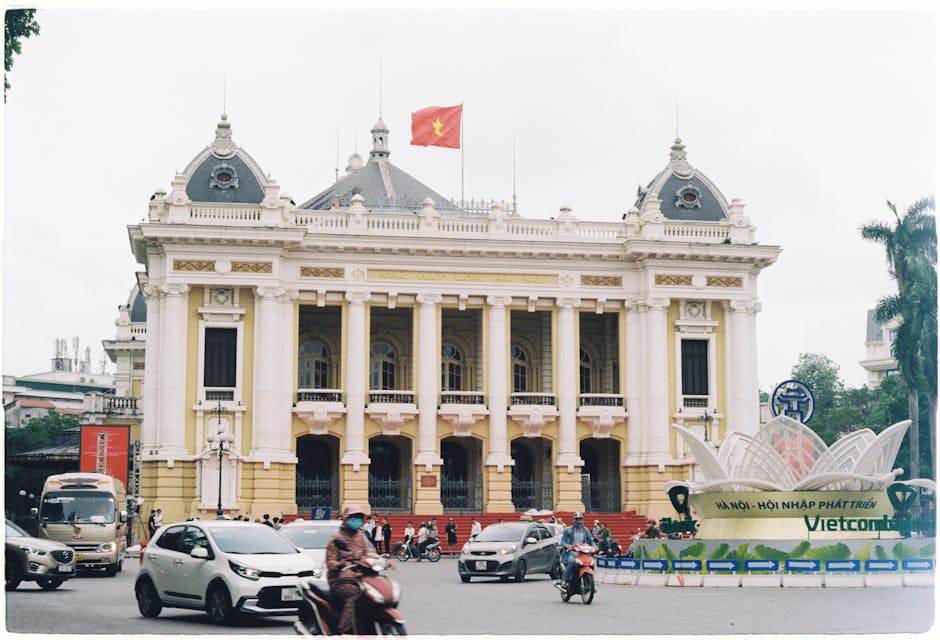
- 1888-1954: Massive French construction — Opera House, Cathedral, French Quarter.
- 1896: Hoa Lo Prison built.
- 1902: Long Bien Bridge completed.
- 1925: Indochinese style architecture (blending French + Vietnamese).
1945-1954: Independence Struggle
August Revolution (1945)
August 19, 1945: Viet Minh seize Hanoi. September 2, 1945: Ho Chi Minh declares Vietnamese independence at Ba Dinh Square.
French War (1946-1954)
French return to reclaim Indochina. War ends with Vietnamese victory at Dien Bien Phu (May 1954). Geneva Accords divide Vietnam.
October 10, 1954: Hanoi Liberated
French troops withdraw. Annual public holiday.
1954-1976: Divided Vietnam
North Vietnam Capital
Hanoi becomes capital of Democratic Republic of Vietnam.
American War (1965-1973)
- 1965: Direct US involvement begins.
- 1972: Linebacker II Christmas bombings devastate Hanoi.
- 1973: Paris Peace Accords. US withdraws.
- April 30, 1975: South Vietnam falls. Vietnam unified.
1976-1986: Reunified Vietnam
- Hanoi becomes capital of unified Socialist Republic of Vietnam.
- Centralized planning, economic difficulties.
- Soviet-style architecture and infrastructure.
- Mass migration from countryside.
1986-Present: Doi Moi (Reform)
Doi Moi Reforms (1986)
Vietnam shifts to market economy. Hanoi begins rapid transformation.
1990s: Economic Boom Begins
- Foreign investment.
- Private enterprise.
- Modern infrastructure construction.
- Rapid population growth.
2000s-2010s: Modernization
- 2000: Vietnam-US trade normalization.
- 2007: Vietnam joins WTO.
- 2010: Hanoi 1,000-year anniversary.
- 2014: Lotte Center opens (272m).
- 2021: First metro line opens.
2020s: Modern Capital
- Population 8+ million.
- 2 metro lines operational.
- International tourism booming.
- Tech startup ecosystem.
- UNESCO Imperial Citadel listed (2010).
Best Sites to See Each Historical Era
Ly & Tran Dynasty (1010-1400)
- Imperial Citadel of Thang Long (foundations).
- One Pillar Pagoda.
- Temple of Literature.
- Hoan Kiem Lake area (Le Loi statue).
Le Dynasty (1428-1788)
- Imperial Citadel of Thang Long (Le Dynasty additions).
- Hoan Kiem Lake (legend setting).
- Quan Thanh Temple.
Nguyen Dynasty (1802-1945)
- Hanoi Flag Tower (1812).
- Some Old Quarter buildings.
French Colonial (1873-1954)
- Hanoi Opera House.
- St. Joseph’s Cathedral.
- Sofitel Metropole.
- Presidential Palace.
- French Quarter villas.
- Hoa Lo Prison.
- Long Bien Bridge.
Independence Struggle (1945-1954)
- Ba Dinh Square (independence declaration).
- Vietnam Military History Museum.
American War (1965-1975)
- Hoa Lo Prison (US POW exhibits).
- Vietnam Military History Museum.
- B-52 Victory Museum.
- House D67 War Bunker.
- Sofitel Metropole bomb shelter.
Modern Era (1986-present)
- Lotte Center.
- Vincom Royal City.
- Hanoi metro stations.
- Modern French Quarter cafes.
1,000-Year History Walking Tour (Full Day)
- 8:00 AM: Imperial Citadel of Thang Long (Ly-Le-Nguyen layers).
- 10:30 AM: Temple of Literature (Ly Dynasty).
- 12:00 PM: Lunch.
- 1:30 PM: Hoan Kiem Lake + Ngoc Son (Le Dynasty legend).
- 2:30 PM: French Quarter walk (colonial era).
- 4:00 PM: Hoa Lo Prison Museum.
- 5:30 PM: Ho Chi Minh Mausoleum complex (independence era).
- 7:00 PM: Sunset at Long Bien Bridge.
- 8:00 PM: Modern Hanoi dinner in Old Quarter.
Books to Read
- Vietnam: A New History — Christopher Goscha.
- Hanoi: City of the Rising Dragon — Georges Boudarel.
- The Sympathizer — Viet Thanh Nguyen.
- The Quiet American — Graham Greene.
- Hanoi: Biography of a City — William Logan.
Hanoi 1,000-Year History FAQs
How old is Hanoi?
Founded 1010 AD as Thang Long. 1,000+ years old.
Was Hanoi always the capital?
No — capital moved to Hue under Nguyen Dynasty (1802-1945).
What does Thang Long mean?
“Rising Dragon” — named for legend of dragon rising from Red River.
What does Hanoi mean?
“Inside the river” — reflecting Red River Delta location. Adopted 1831.
Best historical site?
Imperial Citadel of Thang Long — UNESCO site with 13 centuries of layers.
Are tours available?
Yes — private historians offer specialized tours $50-100/day.
How long for a history tour?
Full day for highlights. Multi-day for deep dive.
Did Hanoi celebrate 1,000 years?
Yes — massive year-long celebration in 2010.
Plan Your Hanoi History Tour
Hanoi’s deep history rewards exploration. Pair this guide with our culture and history pillar, Imperial Citadel, Temple of Literature, French colonial architecture, and war history museums.