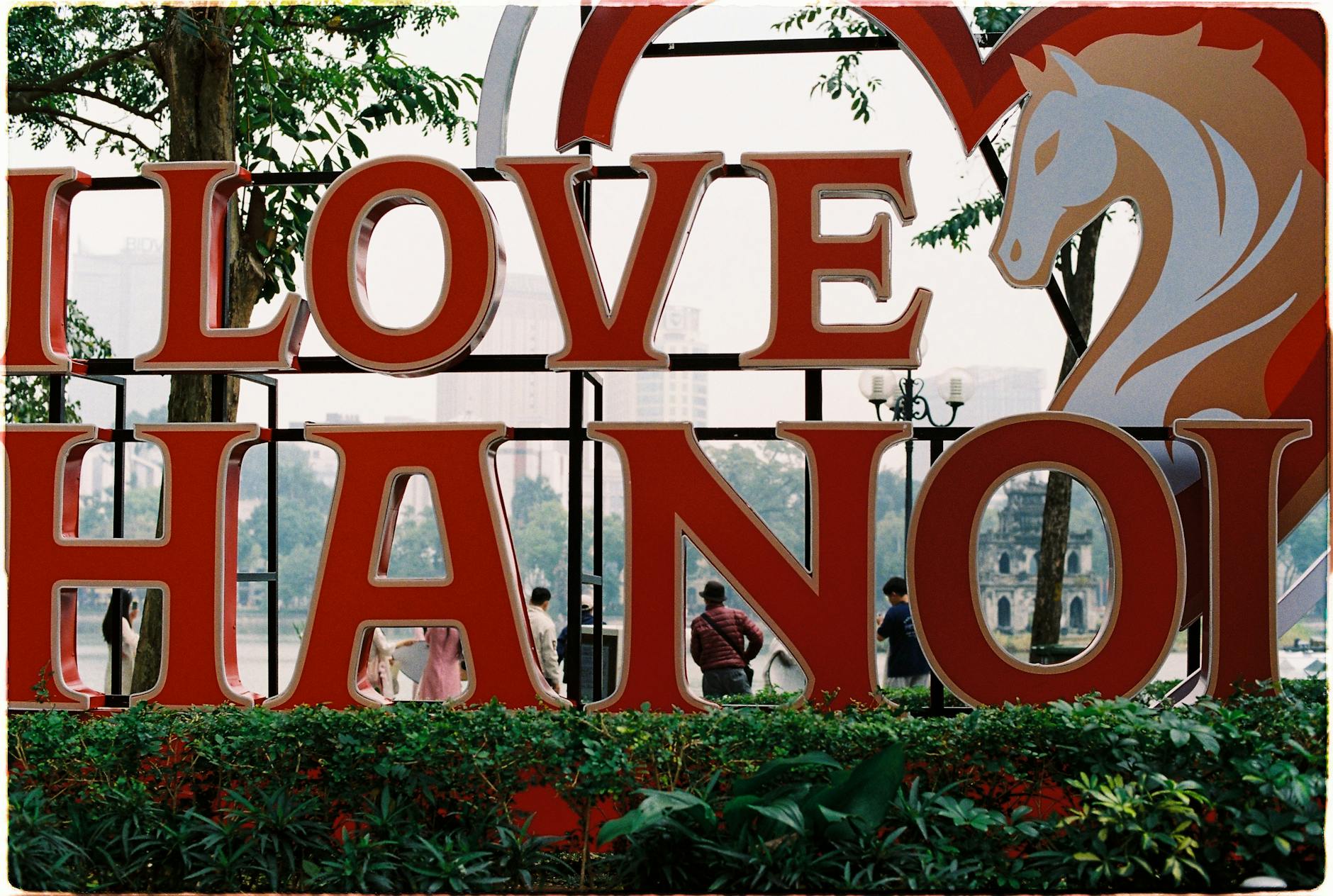
Stepping off the plane at Noi Bai International Airport for your first time visiting Hanoi, you may feel a swirl of excitement, jet lag, and curiosity. Vietnam’s thousand-year-old capital is a sensory whirlwind — thousands of motorbikes flowing like a river through narrow streets, the smell of charcoal smoke and lemongrass drifting from sidewalk kitchens, French colonial mansions tucked between glittering temples, and a layered history that stretches from imperial dynasties to modern-day cafés. This complete first-time visitor guide breaks down everything you need to know to land confidently, navigate the city, eat fearlessly, and fall in love with Hanoi the way millions of travelers do every year.
Why Hanoi Should Be Your First Vietnam Stop
Hanoi rewards curious travelers in ways that southern cities like Ho Chi Minh City cannot. While Saigon dazzles with skyscrapers and modern energy, Hanoi feels like a living museum where past and present collide on every corner. As a first-time visitor, you’ll find that the compact tourist core makes the city remarkably easy to explore on foot, while its central location in northern Vietnam puts world-class destinations like Halong Bay, Ninh Binh, and Sapa within easy reach as day trips or overnight extensions.
The city is also surprisingly affordable. A bowl of pho costs around 50,000 VND (about $2 USD), comfortable mid-range hotels run $30-60 per night, and a cold local beer at a sidewalk “bia hoi” joint can be had for less than the price of a candy bar back home. Combine that with fascinating cultural sites, world-renowned street food, and warm hospitality, and you have one of Asia’s most rewarding introductory destinations.
Best Time to Visit Hanoi for First-Timers
Timing your trip well can make or break your first Hanoi experience. The city sits in northern Vietnam where four distinct seasons produce dramatically different conditions. Most travel writers and locals agree that the sweet spots are October through November and March through April, when temperatures hover in the comfortable 20-28°C (68-82°F) range with low humidity and minimal rain.
Summer (June through August) brings the worst weather for sightseeing — daytime highs of 32-38°C (90-100°F) combined with humidity above 80% can feel oppressive, especially when paired with frequent afternoon downpours. Winter (December through February) is dry and cool but can dip into the low teens (50s F), which can be uncomfortable in older hotels without proper heating. If you can only travel during these less ideal windows, plan plenty of indoor café and museum time and pack layered clothing.
Quick Season Cheat Sheet
- March-April: Mild, dry, beautiful spring blossoms — arguably the perfect first-timer window.
- May: Heat and humidity climb fast; pre-monsoon thunderstorms become common.
- June-August: Hot, humid, frequent heavy rain. Cheap hotel rates but tough sightseeing.
- September-October: Heat fades, the famous golden autumn light arrives, festival season begins.
- November: Crisp, dry, sunny — ideal walking weather and excellent photography.
- December-February: Cool to chilly, often misty mornings. Good for foodies, less so for sunset photos.
Getting from Noi Bai Airport to the City
Hanoi’s Noi Bai International Airport (HAN) sits roughly 25-35 km north of the city center. The drive takes 30-60 minutes depending on traffic and where you’re staying. Choosing the right transfer method can set the tone for your entire trip — especially after a long international flight.
Option 1: Pre-Booked Private Transfer (Best for First-Timers)
For roughly $13-20 USD, a pre-booked private car will meet you at arrivals with your name on a sign and take you straight to your hotel. This eliminates the most common first-timer headache: airport taxi scams. Book through your hotel, Klook, or Welcome Pickups before you fly. Confirm the driver’s name and vehicle plate when they arrive, and never get into an unmarked car with someone offering “cheap rides” in the arrivals hall.
Option 2: Grab (Ride-Hailing App)
Once you have an active SIM or roaming data, Grab is a fantastic option throughout your stay. From the airport, expect to pay 280,000-380,000 VND ($11-15 USD) for a Grab Car to the Old Quarter. The official Grab pickup zone is in the multi-storey car park at both Terminals — follow the signs labeled “Ride Hailing.” Drivers occasionally cancel airport rides during peak times; if that happens, simply rebook.
Option 3: Authorized Airport Taxis
Recognized brands like Taxi Group, Mai Linh, and Noi Bai Taxi operate metered cabs from the official taxi rank just outside arrivals. Expect to pay 350,000-450,000 VND ($14-18 USD) on the meter. Refuse offers from anyone approaching you inside the terminal — legitimate taxis only operate from the marked rank.
Option 4: Public Bus 86
The cheapest option at just 45,000 VND (~$1.80) is the Bus 86 express service from both terminals to Hanoi Railway Station, with multiple Old Quarter stops along the way. It runs roughly every 25-30 minutes from 5:30 AM to 10:30 PM. Travel time is 50-75 minutes. Skip this if you have heavy luggage or arrive late at night.
Where to Stay on Your First Visit
The single most important accommodation decision for first-timers is location. Stay in or directly adjacent to the Old Quarter (Hoan Kiem District). This puts you within walking distance of the lake, night market, hundreds of restaurants, the major sightseeing core, and most pickup points for tours and onward transfers.
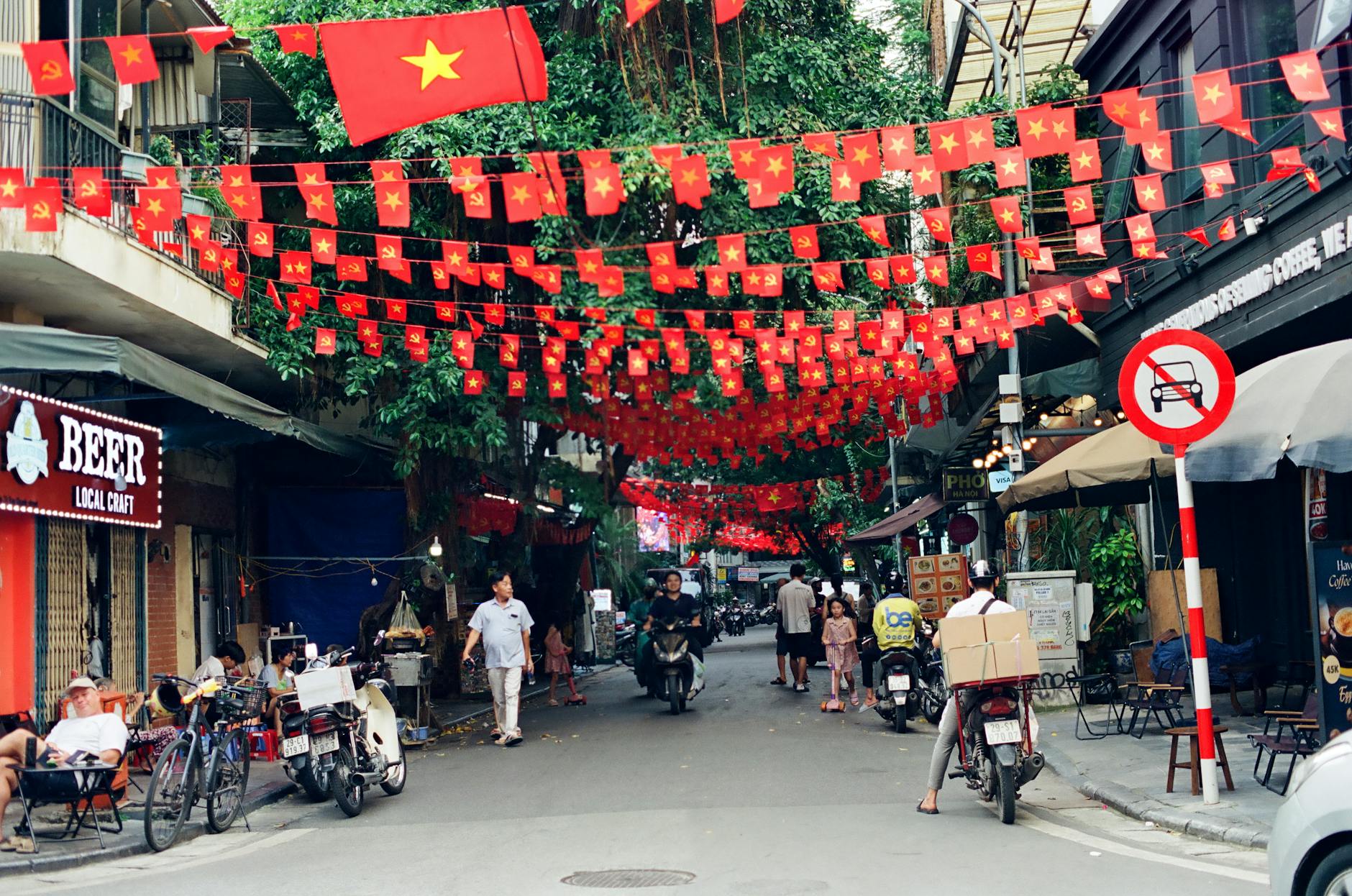
For deep dives into specific neighborhoods, hotel recommendations, and pricing, see our complete Where to Stay in Hanoi guide. As a quick orientation, here are the areas first-timers should know:
- Old Quarter (Hoan Kiem): Best for first-timers. Atmospheric, central, walkable, never boring.
- French Quarter: Just south of the lake. Quieter, more upscale, gorgeous colonial architecture — great for couples and second-timers.
- West Lake (Tay Ho): Trendy expat district with boutique cafés and lake views. Less convenient for sightseeing but charming for longer stays.
- Ba Dinh: Government district with major monuments. Less hotel choice but quiet, spacious, and culturally rich.
Budget travelers can find clean dorm beds for $7-12, mid-range boutique hotels run $35-70 per night, and luxury heritage properties like the Sofitel Legend Metropole start around $250. Book 2-4 weeks ahead during peak season (October-November and March-April).
Mastering Hanoi Street Crossing & Traffic
Few sights are as intimidating to first-time visitors as Hanoi’s endless rivers of motorbikes. With 7+ million two-wheelers swarming the city, crossing the street can feel impossible. But there’s a method, and once you understand it, you’ll never look at urban traffic the same way again.
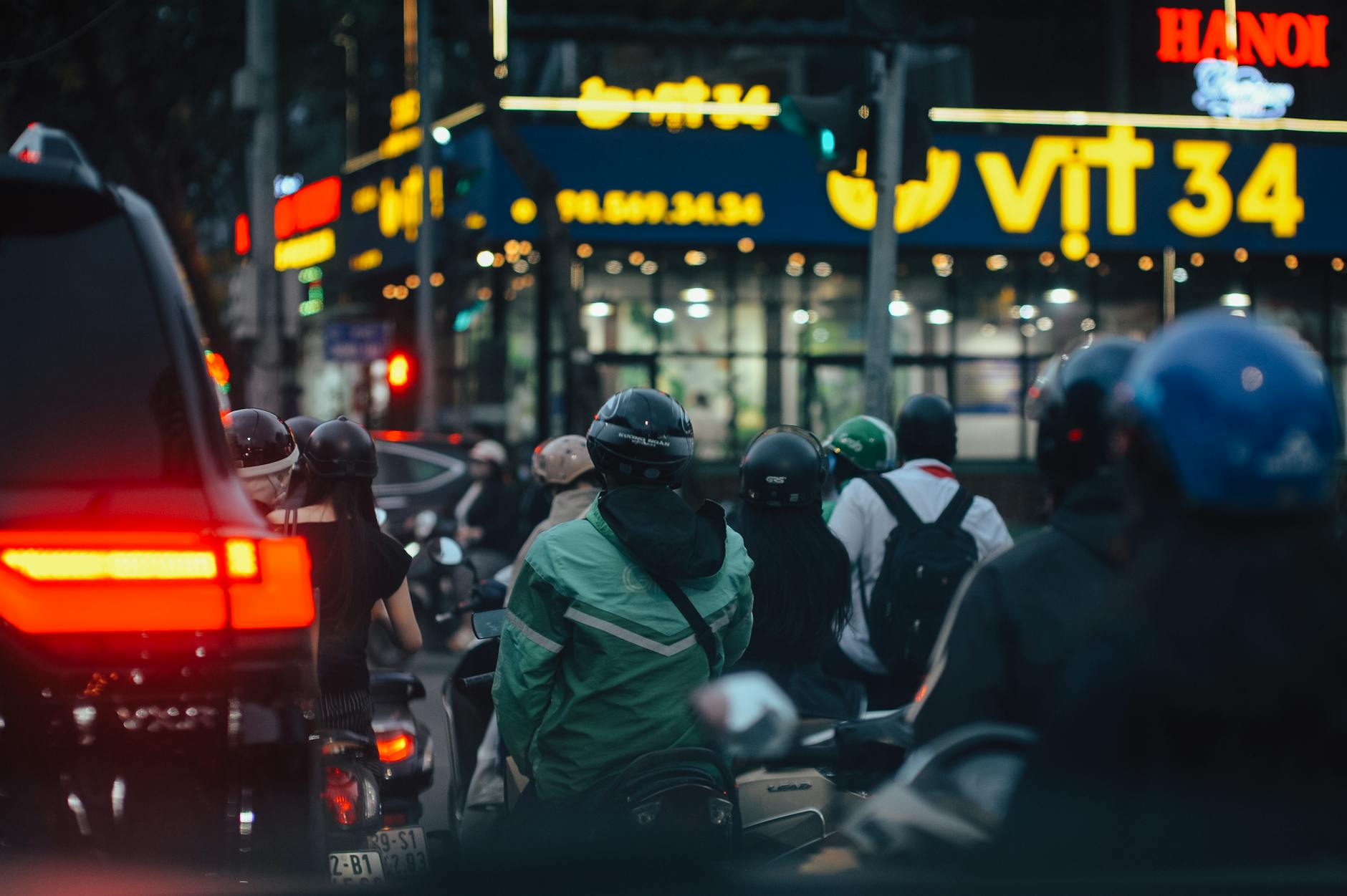
The Hanoi Crossing Rules
- Wait for a small gap. You’re looking for a slight thinning, not a clear break.
- Step off confidently and keep moving. Predictable pace is everything.
- Make eye contact with drivers when possible — they will adjust around you.
- Never run, never stop suddenly, never reverse course. Drivers calculate your trajectory based on your current speed.
- Hold one hand up like a friendly stop sign — locals do this to make themselves more visible.
Within 24 hours you’ll be crossing seven-lane intersections like a local. If you’re truly nervous, follow a Vietnamese pedestrian across — they know exactly when to go.
Money, ATMs & Tipping in Hanoi
Vietnam’s currency is the Vietnamese Dong (VND). As of 2026, $1 USD equals roughly 25,000-26,000 VND. The notes range from 1,000 VND up to 500,000 VND, and they all look surprisingly similar — particularly the blue 20,000 and 500,000 notes, which has fueled an enduring currency-swap scam at busy markets. Always count your change and stack notes by denomination in your wallet.
Cash vs. Card
Cash is king in Hanoi. Street food vendors, taxis, market stalls, small cafés, and most family-run shops are cash-only. Mid-range and upscale hotels, fine-dining restaurants, supermarkets, and tour operators accept Visa and Mastercard, sometimes with a 2-3% surcharge. American Express is rarely accepted outside top-tier hotels.
ATMs
ATMs are everywhere — literally on every Old Quarter corner. Use ATMs attached to major banks like Vietcombank, BIDV, Techcombank, Sacombank, or HSBC for the lowest fees and best exchange rates. Avoid free-standing ATMs inside convenience stores or shops. Most ATMs cap single withdrawals at 2-3 million VND, with fees of 25,000-55,000 VND per transaction. Always notify your home bank of travel beforehand to avoid card freezes.
Tipping Culture
Vietnam is not a tipping country in the Western sense, and you should never feel obligated to tip. That said, tipping is increasingly appreciated in tourist areas. Reasonable guidelines:
- Restaurants: Round up the bill, or leave 5-10% at sit-down places (only if no service charge).
- Tour guides: 100,000-200,000 VND per person per day for excellent service.
- Spas and salons: 10% if service was good.
- Hotel porters: 20,000-50,000 VND per bag.
- Taxis and Grab: Round up to the nearest 10,000 VND.
Must-Try Foods on Your First Visit
If you remember nothing else from this guide, remember this: eat on the street. Hanoi’s greatest culinary triumphs come from plastic-stool sidewalk kitchens, not white-tablecloth restaurants. Vendors typically specialize in one or two dishes that they have perfected over generations. The best advice for nervous first-timers: pick a stall full of locals and a high turnover of customers — this guarantees fresh ingredients and excellent quality.
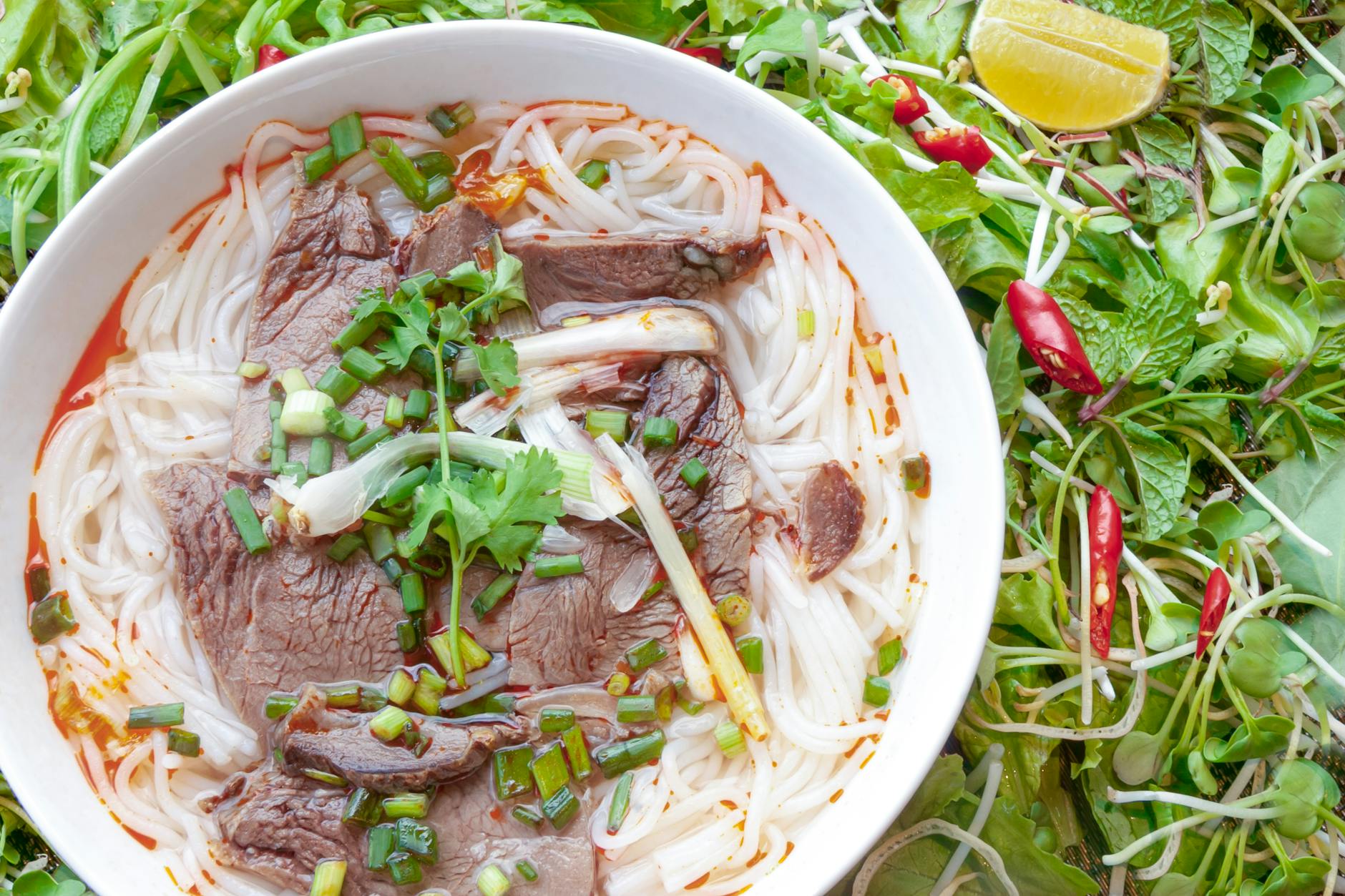
The First-Timer Hit List
- Pho: Vietnam’s national dish, born here in northern Vietnam. Try a bowl of pho bo (beef) for breakfast on day one. Legendary spots include Pho Gia Truyen (49 Bat Dan), Pho Thin (13 Lo Duc), and Pho 10 Ly Quoc Su.
- Bun Cha: Grilled pork patties and pork belly served with rice noodles, fresh herbs, and a tangy fish-sauce dipping broth. Try Bun Cha Huong Lien (where President Obama dined with Anthony Bourdain) or Bun Cha Dac Kim.
- Banh Mi: Crispy baguette sandwich filled with pâté, pickled vegetables, fresh herbs, and your choice of grilled meat or omelet. Banh Mi 25 is a backpacker classic.
- Cha Ca La Vong: Hanoi-only specialty of turmeric fish sizzled tableside with dill and peanuts. Try the original on Cha Ca Street.
- Egg Coffee (Ca Phe Trung): Whipped egg yolk and condensed milk over strong Vietnamese coffee. Invented in Hanoi at Café Giang in 1946.
- Bia Hoi: Fresh draft beer, brewed daily, sold for 5,000-15,000 VND a glass at sidewalk corners. Bia Hoi Junction (Ta Hien & Luong Ngoc Quyen) is the legendary first-night experience.
For deeper culinary exploration, browse our complete Hanoi food guide and our forthcoming guides to the best pho, street food etiquette, and food tours.
Top Sights for Your First 48 Hours
Hanoi can easily fill a week, but most first-time visitors have just 2-3 days. The good news is the headline attractions cluster tightly around the lake and Old Quarter, so a short stay still feels rich. Start with these essentials.

1. Hoan Kiem Lake & Ngoc Son Temple
Begin your first morning here. The legendary “Lake of the Restored Sword” sits in the city’s symbolic center. Walk the perimeter, cross the iconic red Huc Bridge to Ngoc Son Temple (entry 50,000 VND), and watch locals practicing tai chi at sunrise.
2. Old Quarter (36 Streets)
The Old Quarter’s 36 ancient streets each historically specialized in a single trade — silk, paper, silver, herbal medicine, tin goods. Many still bear those names today. Wander aimlessly. Pause for an iced coffee. Get lost. Repeat.
3. Train Street
The narrow alley where trains roar past café doorways twice daily. Following 2024-2025 safety crackdowns, sections are open only when accompanied by a registered café host. Check current train schedules locally; the most popular passes are around 7:00 PM and 10:00 PM.
4. Temple of Literature
Vietnam’s first national university, founded in 1070 and dedicated to Confucius. The serene courtyards and ancient stone steles are a must for anyone interested in Vietnamese culture. Entry is 70,000 VND.
5. Ho Chi Minh Mausoleum & Complex
The embalmed body of Vietnam’s revolutionary leader rests in a solemn granite mausoleum. The surrounding complex includes Ho’s stilt house, the Presidential Palace gardens, and the One Pillar Pagoda. Mausoleum visits are free but follow strict dress and behavior rules; closed Mondays, Fridays, and seasonally during October-November for body maintenance.
6. Hoa Lo Prison Memorial
Known darkly to American Vietnam War POWs as the “Hanoi Hilton.” A sobering, intelligently presented museum (entry 50,000 VND) that gives essential historical context.
7. Imperial Citadel of Thang Long
UNESCO-listed remains of the political center of Vietnam from the 11th to 19th centuries. Less crowded than the Mausoleum complex but equally fascinating.
8. Water Puppet Theatre
An 11th-century art form unique to northern Vietnam. The Thang Long Water Puppet Theatre near Hoan Kiem Lake offers nightly 50-minute shows that delight all ages.
For a deeper dive into the city’s entire menu of experiences, our 50+ Best Things to Do in Hanoi guide is the next read.
Cultural Etiquette First-Timers Get Wrong
Hanoi is forgiving of foreigners’ cultural fumbles, but a little awareness goes a long way. The biggest first-timer mistakes are easy to avoid:
- Dress modestly at religious sites. Cover shoulders and knees. Some pagodas keep loaner sarongs but not all.
- Remove shoes before entering temples and most homes. Look for a pile of sandals at the door — that’s your cue.
- Use both hands when giving or receiving money, business cards, or gifts. Especially with elders.
- Keep your voice down in temples, parks, and during meals. Loud foreign tourists are a stereotype that exists for a reason.
- Never touch a Vietnamese person’s head — the head is considered sacred.
- Don’t point with your foot or rest your feet on chairs at sit-down restaurants.
- Avoid public displays of affection. Hand-holding is fine; making out is not.
- Bargain politely. Smile, joke, and never get aggressive. If a vendor says no, walk away — haggling sometimes triggers a counter-offer.
Common First-Timer Scams (And How to Beat Them)
Hanoi is overwhelmingly safe, but petty tourist scams are a real and predictable nuisance. The good news: every common scam is easily avoided with awareness.
- The Donut/Conical Hat Vendor: A smiling vendor offers a “free taste” or quickly drops their carry-pole on your shoulders for a photo — then demands payment. Decline firmly with “khong, cam on” (no, thank you) and walk on.
- Cyclo Scams: Quoted price on the way out becomes ten times more on arrival. Agree on the exact price, route, and currency in writing or via Google Translate before getting in.
- Currency Swap: Vendor “accidentally” gives change with too-similar 20,000 and 500,000 notes. Count change every single time.
- Fake Taxis: Especially around airport arrivals. Use Grab or pre-book transfers.
- Shoeshine Surprise: A friendly fixer grabs your shoe to glue a sole, then charges $20. Walk away from anyone touching your shoes uninvited.
- Restaurant Bill Inflation: Order off menus with prices listed. Photograph the menu before ordering at street stalls.
- Friendly Card Game Invitation: A stranger invites you home to meet a relative. The result is always a rigged card game and serious financial loss. Never accept.
For a far deeper dive on scams, safety, healthcare, and emergency contacts, see our Hanoi Safety Tips guide.
Getting Around Hanoi as a First-Timer
The Old Quarter is wonderfully walkable — for sights between the lake and the train station, your two feet are your best transport. For longer hops, you have several easy options:
- Grab (App): Cars and motorbike taxis are cheap, metered, and English-friendly. Download before you fly.
- Be / Xanh SM: Local rivals to Grab, often with shorter wait times and electric vehicle options.
- Cyclo: A pedicab tour can be a fun 60-minute Old Quarter experience — fix the price first.
- Walking Tours: Several free local-led walking tours leave from Hoan Kiem Lake daily.
- Hanoi Metro: The Cat Linh-Ha Dong (Line 2A) and Nhon-Ga Hanoi (Line 3) lines now connect parts of the city; useful for specific routes but not the Old Quarter core.
- Public Buses: 8,000-9,000 VND per ride, but routes are confusing for first-timers.
Avoid renting a motorbike on your first trip unless you have prior riding experience and a valid international permit. Hanoi traffic is no place for beginners. Read our complete Hanoi transportation guide for everything from metro lines to long-distance trains.
Connectivity, Visas & Practical Logistics
Visas
Most travelers from the US, UK, EU, Australia, and Canada now use Vietnam’s convenient e-visa, valid for 90 days single or multiple entry. Apply at evisa.gov.vn at least 5-10 days before travel and pay $25-50 USD. Print or save the approval letter on your phone — you’ll show it on arrival. ASEAN nationals enjoy varying visa-free entry. Always check current rules with your embassy before booking flights.
SIM Cards & Internet
Pick up a tourist SIM at the airport (Viettel and Vinaphone are most reliable) for roughly 200,000-350,000 VND with 30-50 GB of data for 30 days. Bring your unlocked phone and passport. Alternatively, eSIMs from Airalo or Holafly can be activated before you fly. Wi-Fi is free and fast in nearly every café, hotel, and restaurant.
Power & Plugs
Vietnam runs on 220V/50Hz. Most outlets accept European-style two-pin plugs (Type A, C, F). A universal travel adapter handles every situation. Voltage converters are not needed for modern dual-voltage electronics.
Health & Vaccinations
Routine travel vaccinations (Hep A, Typhoid, Tetanus) are recommended; check with your doctor 4-6 weeks before flying. Tap water is not drinkable — stick to bottled or filtered water and skip iced drinks at sketchy stalls (most reputable places use commercial ice). Travel insurance with medical evacuation coverage is strongly recommended; Family Medical Practice and Vinmec International are the two go-to private hospitals if anything goes wrong.
Sample First-Timer 3-Day Itinerary
Here’s a tight, satisfying first-time-visitor itinerary that hits the highlights without burning you out:
Day 1: The Heart of Hanoi
Morning pho near your hotel; sunrise tai chi watching at Hoan Kiem Lake; explore Ngoc Son Temple. Late morning Old Quarter walking tour, ending with banh mi for lunch. Afternoon visit Temple of Literature and a local egg coffee at Café Giang or Café Dinh. Evening Water Puppet Show, dinner of bun cha, and bia hoi on Ta Hien Street.
Day 2: History & Culture
Early start at the Ho Chi Minh Mausoleum complex (closed Monday and Friday). Imperial Citadel of Thang Long. Lunch in the French Quarter. Afternoon Hoa Lo Prison Memorial and Vietnamese Women’s Museum. Evening street food tour or sunset cocktail at a Old Quarter rooftop bar like Skyline Hanoi.
Day 3: Day Trip or Deeper Dive
Take a guided day trip to Ninh Binh (Trang An & Bich Dong) or Bat Trang Pottery Village, or stay in town for the West Lake area, the Vietnamese Women’s Museum and the Vietnam Museum of Ethnology. Wrap up with a final cha ca dinner before flying out.
For longer or shorter stays, see our forthcoming Hanoi Itineraries Guide covering 1-day, 4-day, and week-long routes.
Final Tips for First-Time Hanoi Visitors
- Pack light, breathable clothes plus one warm layer for evenings or air-conditioned cafés.
- Bring flat, sturdy walking shoes. You’ll cover 15,000+ steps daily.
- Carry a small day pack across your front in crowds.
- Download Google Maps offline, Grab, and Google Translate (offline Vietnamese pack) before arrival.
- Always carry a hotel business card in Vietnamese in case you get lost.
- Save the tourist police number 113 in your phone.
- Withdraw cash in smaller amounts and stash a backup card separately.
- Book Halong Bay or Ninh Binh tours through your hotel or reputable operators — not from random street agents.
- Embrace plastic stools, share tables, and order from menus written in Vietnamese only — that’s where the magic is.
- Slow down. Hanoi rewards travelers who linger over a coffee far more than those who race between sights.
Frequently Asked Questions
How many days do I need for my first visit to Hanoi?
Two full days is the absolute minimum to cover the headline sights. Three to four days is the sweet spot — enough to see the city, take one day trip, and slow down for proper food experiences. A full week works beautifully if you want Hanoi as a base for Halong Bay, Ninh Binh, and Sapa.
Is Hanoi safe for first-time visitors?
Yes. Violent crime against tourists is rare. The main risks are scams, pickpocketing in crowds, and reckless traffic. Awareness and basic precautions handle all three.
Do I need to know Vietnamese to visit Hanoi?
No. English is widely spoken in tourist areas, hotels, and major restaurants. Learning a handful of polite phrases (xin chao for hello, cam on for thank you) earns enormous goodwill.
How much does a first-time Hanoi trip cost per day?
Backpackers can manage on $30-40/day including dorm bed. Mid-range travelers spend $70-120/day. Luxury travelers easily spend $250+/day. Hanoi is one of the cheapest major capitals in Asia.
Can I drink the tap water in Hanoi?
No. Always drink bottled, filtered, or boiled water. Most quality hotels provide complimentary bottled water; refill stations are increasingly common.
Is Hanoi or Ho Chi Minh City better for a first Vietnam trip?
If you have only one city, Hanoi narrowly wins for first-timers because it’s more compact, more historically rich, and better positioned for famous side trips like Halong Bay and Ninh Binh. If your itinerary includes both, fly into Hanoi and out of Ho Chi Minh City (or vice versa) and travel south down the coast.
Your First Hanoi Trip Starts Here
Hanoi rewards travelers who arrive open, curious, and willing to be surprised. The first 24 hours can feel overwhelming — the noise, the heat, the traffic, the unfamiliar smells — but by day two something shifts. You start crossing streets without flinching. You order pho with a smile and a thumbs-up. You discover your favorite alley, your favorite egg-coffee bench, your favorite sunset spot on Long Bien Bridge. By day three, you’ll already be planning your return trip. Welcome to Hanoi. You’re going to love it.
Ready to dive deeper? Continue planning with our Ultimate Hanoi Travel Guide, browse Where to Stay, eat your way through the Hanoi Food Guide, and stay safe with our Hanoi Safety Tips.